

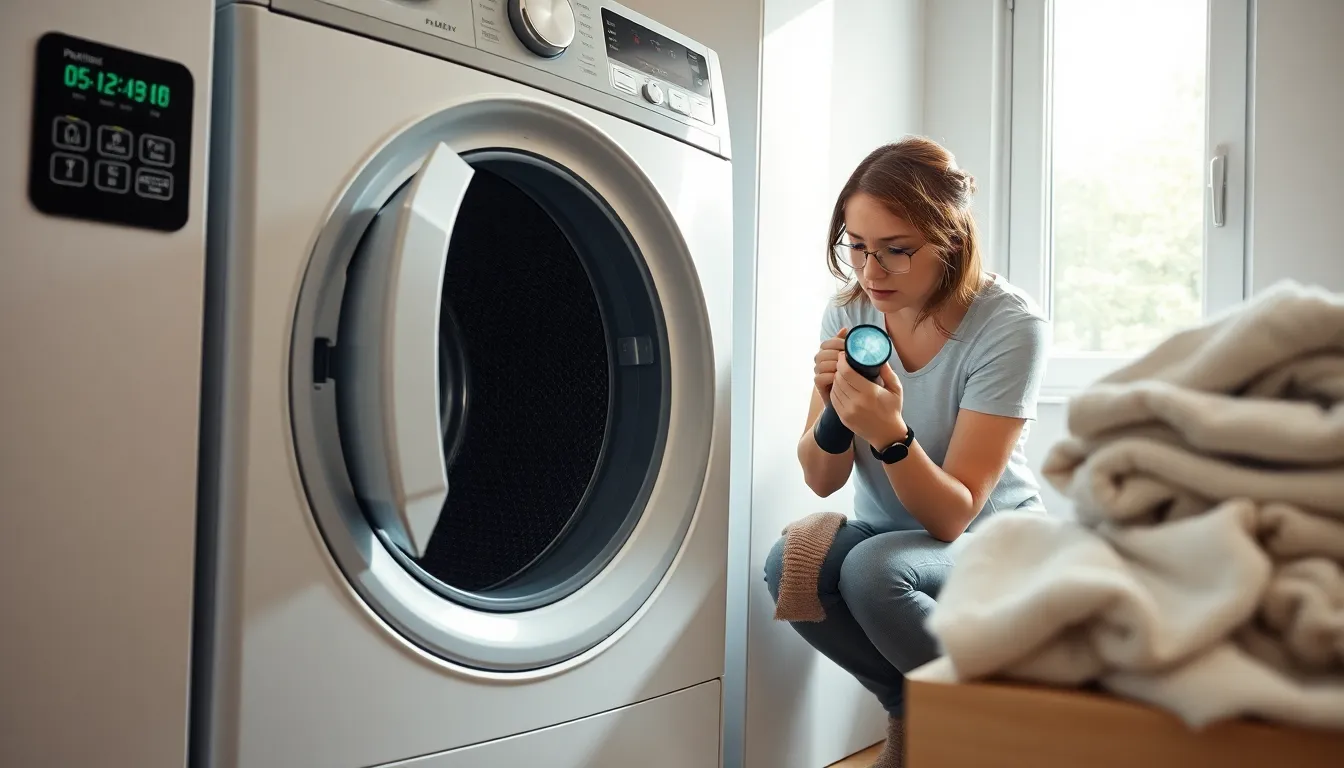
When your dryer’s heating up like a sauna but refusing to spin, it’s enough to make anyone question their life choices. You’ve got a pile of wet laundry staring you down, and your trusty appliance seems to have gone on strike. It’s like the dryer decided it’s time for a vacation while you’re left playing the role of laundry juggler.
Table of Contents
ToggleCommon Causes of A Dryer Not Spinning But Heating
Several factors can cause a dryer to heat without spinning. Understanding these can help identify and resolve the issue effectively.
Worn Drive Belt
A worn drive belt commonly prevents the dryer drum from spinning. As the belt ages, it may stretch or fray, losing its grip on the drum. Inspecting the drive belt is essential. If there’s visible damage or significant wear, replacing the belt usually resolves the spinning problem. Maintenance or replacement can extend the life of the dryer, ensuring it operates efficiently.
Faulty Motor
A faulty motor can also hinder spinning action while still allowing the dryer to heat. The motor powers the drum, and if it’s malfunctioning, the drum won’t turn. Signs of motor issues include unusual noises or overheating. Testing the motor’s functionality is crucial. If it doesn’t start or shows signs of failure, replacement is necessary. The motor’s health directly impacts drying performance.
Malfunctioning Door Switch
A malfunctioning door switch might lead to spinning issues, even if heating functions correctly. The door switch must close properly to allow the dryer to operate. If the switch is faulty or stuck, the dryer may not spin despite generating heat. Testing the switch’s continuity can uncover problems. If found defective, replacing the switch ensures the dryer’s functionality is restored. Ensuring proper door switch operation is vital for dryer performance.
Troubleshooting Steps
Addressing the issue of a dryer heating but not spinning involves a few key steps. Each step helps to identify the root of the problem.
Check the Load Size
Loading the dryer properly is essential. Overloading can prevent the drum from spinning effectively. Conversely, underloading may not engage the drum’s motion. Aim for a balanced load to allow the drum enough space to rotate freely. Ensure items are distributed evenly within the drum to promote even drying. Adjusting the load size can sometimes resolve the issue quickly without further intervention.
Inspect the Door Switch
The door switch plays a crucial role in dryer operation. A malfunctioning switch might prevent the drum from turning while still allowing heat to generate. Check that the door fully closes when in use; this can affect the dryer’s ability to function correctly. Press the switch and listen for a click sound; if you don’t hear it, the switch might be faulty. Replacement of the door switch often restores proper operation.
Examine the Drive Belt
The drive belt is vital for drum rotation. Inspecting the belt for signs of wear is essential, as it can stretch or fray over time. Look for physical damage or breaks in the belt. If the belt appears worn, consider replacing it to restore spinning capability. Adequate tension in the belt is necessary; a loose belt can also hinder drum movement. Checking the drive belt may reveal significant insights into the dryer’s functionality.
When to Call a Professional
Recognizing when to seek professional help is crucial for resolving dryer issues effectively. Some signs indicate potential major problems that require expert intervention.
Signs of Major Issues
Unusual noises often signal a malfunctioning motor or other internal components. Overheating during cycles could suggest more significant electrical problems. If the dryer frequently trips circuit breakers, this indicates a serious electrical failure. Additionally, persistent error codes displayed on digital panels usually require specialized knowledge to interpret and remedy. Noticing burning smells during operation can point to serious issues like motor failure or electrical shorts. Ignoring these signs may lead to further damage and may compromise household safety.
Finding a Reliable Technician
Research local appliance repair services by checking online reviews and ratings. Many users share their experiences, which helps in assessing customer satisfaction. Asking friends or family for recommendations can also provide trusted options. Once potential technicians are identified, requesting quotes and comparing prices helps in evaluating affordability. Verifying technician credentials and experience ensures they’re qualified to handle dryer repairs. A good technician clearly explains the problem and offers a written estimate before starting any work.
Preventative Maintenance Tips
Maintaining a dryer in good condition helps prevent issues like not spinning while still heating. Implementing regular maintenance keeps the appliance functioning effectively for years.
Regular Cleaning
Cleaning the lint filter after every use improves airflow and dryer efficiency. Accumulated lint can cause overheating and potential fire hazards. Additionally, it’s essential to clean the dryer vent every six months. A blocked vent restricts airflow, which can lead to overheating and prevent the dryer from spinning properly. Wipe down the drum periodically with a damp cloth to eliminate any residue from fabric softeners or dryer sheets. A clean drum helps maintain optimal performance and prevents unpleasant odors.
Scheduled Inspections
Scheduling inspections every year allows for early detection of potential issues. Technicians can identify worn belts, malfunctioning motors, or faulty door switches during a routine check. Inspecting the drive belt and motor often reveals problems before they escalate. Addressing these concerns promptly minimizes expensive repairs. For those who prefer a DIY approach, periodic self-checks can ensure all components function correctly. Noting any unusual sounds or irregularities in operation prompts timely action before further damage occurs. Regular inspections enhance the longevity of the dryer and ensure safe operation.
Addressing a dryer that heats but won’t spin can save time and frustration. By understanding the potential causes and taking proactive steps, individuals can troubleshoot effectively. Regular maintenance and timely inspections play a vital role in preventing these issues.
Recognizing when to seek professional help is equally important. Ignoring warning signs can lead to more significant problems down the line. Taking action sooner rather than later ensures the dryer operates safely and efficiently. With the right approach, managing laundry can remain a hassle-free task.


