

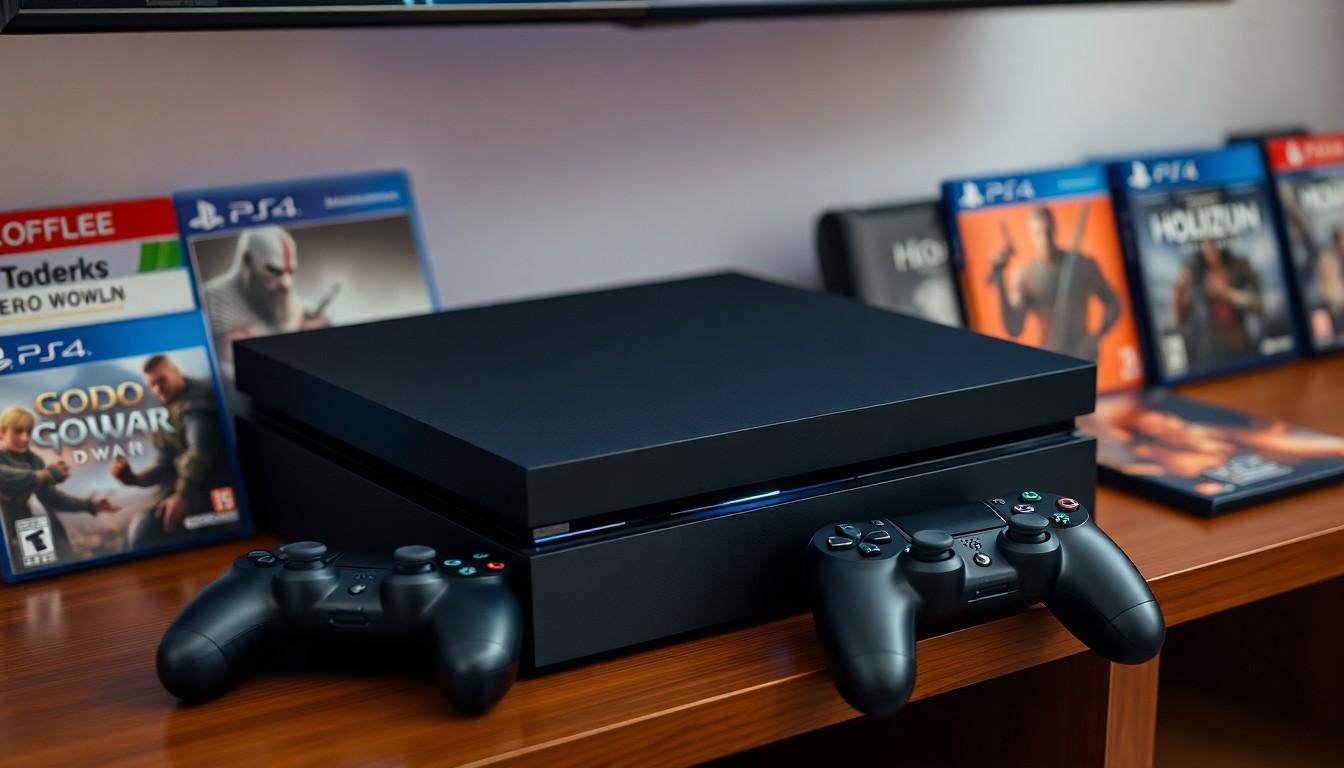
In a world where gaming consoles come and go faster than a cat meme can go viral, the PlayStation 4 emerged as a titan. Released on November 15, 2013, it didn’t just enter the market; it stormed in like it owned the place. With its sleek design and jaw-dropping graphics, it quickly became the go-to choice for gamers itching for an immersive experience.
But why does the PS4 still hold a special place in the hearts of gamers years later? It’s not just about the games; it’s about the memories created and friendships forged over epic battles and late-night gaming sessions. So, whether you’re a die-hard fan or just curious about this gaming marvel, let’s dive into the history of the PlayStation 4 and discover what makes it a true legend in the gaming universe.
Overview of PlayStation 4
PlayStation 4, a home video game console, emerged as a pivotal player in the gaming landscape. Released on November 15, 2013, it experienced immediate success, captivating gamers with its advanced technology and user-friendly interface. The system features a powerful x86-64 AMD Jaguar CPU and a Radeon GPU, delivering stunning graphics and seamless gameplay.
Developers embraced PlayStation 4, producing a diverse catalog of games that appealed to various tastes. Titles such as “The Last of Us Part II,” “God of War,” and “Horizon Zero Dawn” achieved critical acclaim and commercial success. The console’s dualshock 4 controller improved user experience, incorporating a touchpad and motion sensors.
PlayStation 4’s online service, PlayStation Plus, offered multiplayer capabilities and exclusive discounts. Many gamers appreciated the free monthly games, enhancing the platform’s value and encouraging a loyal user base. Significant software updates further enriched the console’s features, including Share Play, which allowed players to share gameplay experiences with friends.
Access to streaming services such as Netflix and YouTube added to its appeal. Gamers could enjoy more than just gaming; they could immerse themselves in various multimedia options, enhancing their overall interaction with the console. The introduction of PlayStation VR expanded the gaming experience into virtual reality, setting it apart from competitors.
PlayStation 4 established a strong community, where players connected through forums and social media. Discussions about game strategies and experiences fostered friendships and a sense of belonging. The combination of innovative technology, diverse content, and a vibrant community solidified PlayStation 4’s legendary status in the gaming world.
Release Date and Announcement

The PlayStation 4 was officially announced on February 20, 2013, during a dedicated event in New York City. Excitement surged as Sony highlighted the console’s capabilities, showcasing its powerful technology and innovative features.
Initial Announcement Details
Sony introduced the PlayStation 4 by unveiling a range of its key components, including the x86 architecture and the enhanced graphics capabilities powered by AMD. During this announcement, developers received significant attention, with major studios expressing enthusiasm for the platform. Mark Cerny, the lead architect, provided insights into the console’s design philosophy, emphasizing a focus on maximizing player experience. The event set the stage for a new era in gaming by showcasing the console’s social integration features and cloud gaming capabilities.
Pre-Launch Hype
Leading up to the launch, anticipation grew rapidly among gamers and industry professionals alike. Trade shows like E3 2013 showcased a robust lineup of exclusive games, fueling discussions and excitement. Online communities buzzed with speculation and analyses, anticipating how the PS4 would outshine its competitors. Additionally, Sony’s strategic marketing campaign leveraged social media platforms, engaging potential customers and fostering a sense of community. These efforts resulted in high pre-order numbers, demonstrating strong demand and establishing a hallmark for future console releases.
Comparisons with Previous Consoles
The PlayStation 4 marked a significant advancement over its predecessor, the PlayStation 3. Rendering capabilities improved dramatically, with the PS4 offering enhanced graphics due to its powerful GPU. Processor efficiency also increased, as the PS4 utilized an x86-64 AMD Jaguar CPU, while the PS3 relied on the Cell processor architecture. Game loading times decreased, leading to a smoother gaming experience overall.
Exclusive titles flourished on the PS4, with franchises like “God of War” and “Horizon Zero Dawn” benefiting from advanced technology and increased production values. The DualShock 4 controller incorporated new features, such as a touchpad and improved motion sensors, enhancing gameplay responsiveness. In contrast, the PS3 controller lacked these innovations, which affected user interaction.
Industry Impact
The release of the PS4 significantly influenced the gaming industry, setting new standards for console performance and online services. Developers embraced the PS4 architecture, leading to a surge in high-quality, innovative game titles. Online multiplayer capabilities expanded under PlayStation Plus, transforming gaming into a more social and interactive experience.
Also, the introduction of multimedia features, such as streaming services, reflected changing gamer preferences. Gamers sought not just gameplay but a holistic entertainment system. The PS4 elevated expectations for future consoles, pushing competitors to innovate and adapt, forever altering the landscape of the gaming industry.
Key Features of PlayStation 4
The PlayStation 4 stands out due to its innovative technology and user-focused design. Gamers appreciate its compelling features and advanced performance, solidifying its position in the gaming ecosystem.
Hardware Specifications
Equipped with a powerful x86-64 AMD Jaguar CPU and a Radeon GPU, the PlayStation 4 delivers remarkable graphics and fluid gameplay. This architecture allows developers to push boundaries in rendering, creating visually stunning environments and immersive experiences. The console includes 8 GB of GDDR5 RAM, ensuring smooth multitasking and quick load times. A 500 GB or 1 TB hard drive stores a large library of games, downloadable content, and multimedia. Users benefit from seamless integration with social features, enabling easy sharing of gameplay footage.
Exclusive Titles
Diverse and critically acclaimed titles define the PS4’s library, attracting players across various genres. Notable exclusives include “God of War,” celebrated for its engaging narrative and stunning visuals. “Horizon Zero Dawn” showcases an expansive open world filled with captivating quests. Meanwhile, “The Last of Us Part II” delivers an intense emotional journey, highlighting the console’s storytelling capabilities. These titles leverage the advanced hardware to maximize performance and graphics quality, shaping the gaming landscape. Gamers connect over these experiences, building a vibrant community around the console.
Reception and Sales Performance
The PlayStation 4 garnered significant praise from both critics and gamers alike. Reviewers consistently highlighted its robust performance and impressive graphics, noting its ability to deliver immersive gaming experiences. Titles like “The Last of Us Part II” and “God of War” received numerous awards, reflecting their creative storytelling and gameplay innovations. Critically acclaimed games contributed to the console’s reputation as a must-have platform for serious gamers.
Sales figures further underline the PS4’s success in the market. Within the initial week of its release, it sold over one million units in North America. As of July 2021, total sales reached approximately 116 million consoles worldwide, solidifying its status as one of the best-selling gaming consoles. With over 500 million games sold by March 2021, the demand for PlayStation 4 software remains a strong indicator of its impact on the gaming industry.
Conclusion
The PlayStation 4’s release marked a transformative moment in gaming history. Its innovative technology and design captured the hearts of gamers worldwide. With a robust library of exclusive titles and enhanced multiplayer features, it fostered a vibrant community that continues to thrive today. The console not only set new standards for performance but also reshaped the gaming landscape, pushing competitors to innovate. As it stands, the PS4 remains a beloved platform that has left an indelible mark on the industry and will be remembered for years to come.


